

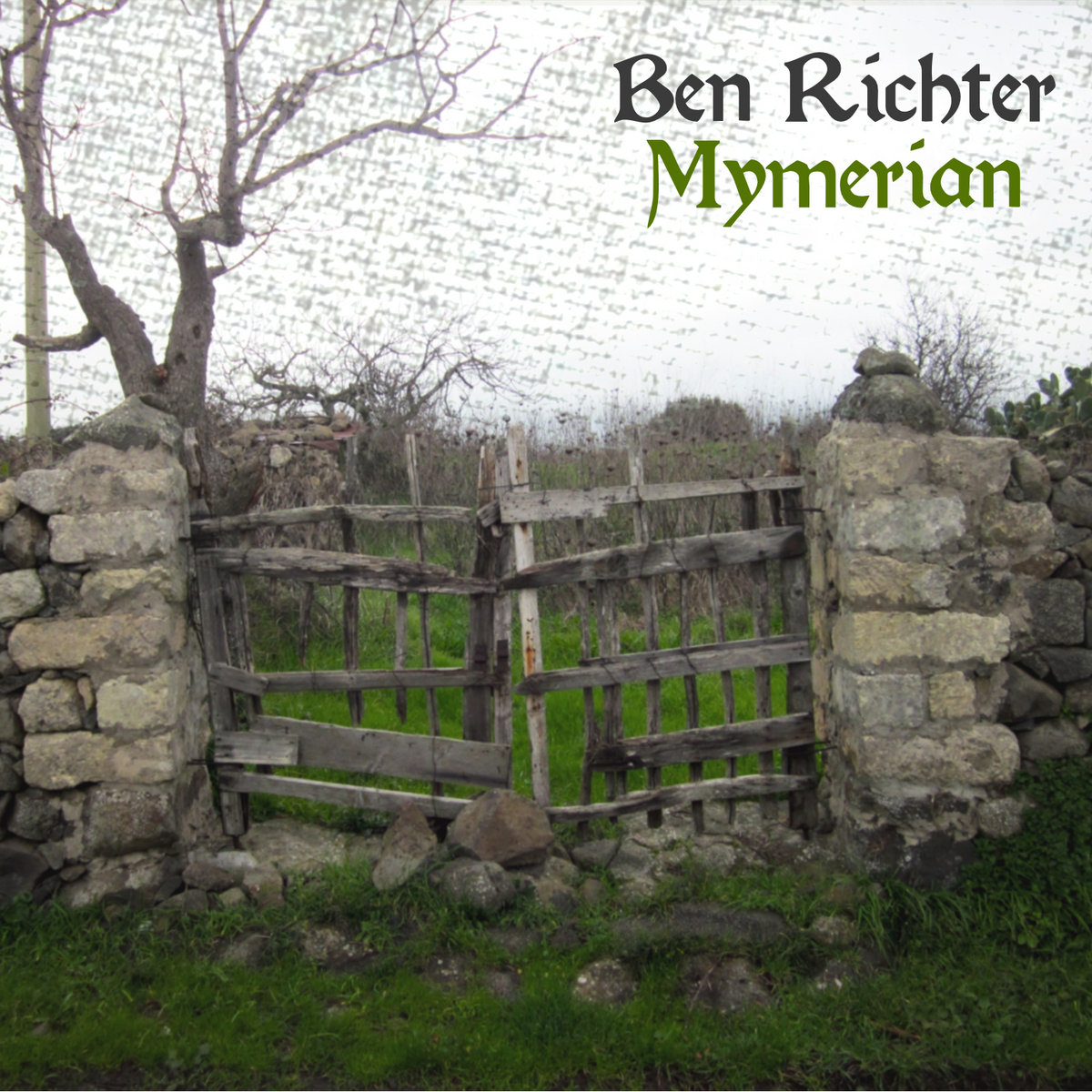
Recorded on a frigid late winter/early spring day in March 2025, the environment in which Mymerian was created aligns well with the coldness of its sound. Ben Richter (organ and accordion) was joined by Laura Cetilia (cello) and Mike Bullock (contrabass) in this performance, resulting in three icy compositions that perfectly channel the bleakness of that time of year, which is I mean as a strong compliment about the confluence of ambience, performance, and composition found here.
Like the most recent release on the Sedimental label (Kassel Jaeger’s A Rift in the Horizon’s Wall), Mymerian was recorded at Epsilon Spires in Brattleboro, Vermont. A former church but now a performance space, the venue’s natural ambience complements the sound impeccably, and the 1906 pipe organ present in the sanctuary of the building that Richter utilizes results a unique space for this trio to perform in. The framework of Mymerian is built upon deep, droning tones that are impacted by the effect of the low temperatures on the instruments’ tuning. The variation in pitch and becomes an essential part of the performance, which complements the fact that the trio are all followers of Pauline Oliveros’ Deep Listening aesthetic, making for a focus on expansive, meditative sound.
The title piece, (subtitled “Green”) comprises nearly half of the CD at just shy of a half hour. The intent of this performance is immediately on display: low register, sustained tones that are almost seem static initially, with subtle variations slowly arising. Ben shifts tones, rising and falling throughout, adding a greater sense of dynamics to what is intentionally a sustained affair. Bowed string clusters provided by Cetilia and Bullock stay in the lower registers, as Richter’s organ remains a constant, grounding the performance. Shrill scraping of strings make for a dissonant counterpoint to the sustained low-end, and while space does appear, it never becomes too open. By the end the strings begin to emulate fog horns and somewhat menacing, guttural noises.
In comparison, “Three Fields (Blue)” is more subtle, but by no means less intense. Leading off with an test-tone like layer, Richter introduces bells in the distance (giving me recent Organum flashbacks) and varying passages are slowly added to the mix: squeaking, scraping noises that give a dynamic, ghostly sensibility to the composition. Final piece “Vaalbara (Red)” is immediately a heavy, intimidating roar of bassy frequencies. Offset by chiming tones and almost train-whistle like bursts, the Richter and crew maintains strength with the developing rumble. The strings and grind and build tension and force along with harsher pitches, resulting in an unsettling, disorienting conclusion.
Although recorded near spring, the bleak Vermont winter can be heard throughout Mymerian. Dense and intense, but never off-putting, Richter, Cetilia, and Bullock perform perfectly in sync with one another, and unless it was otherwise, I would have assumed this to be a tightly structured and treated studio work, not a live performance. With the setting of the performance having such an impact on the sound, the entirety of Mymerian solidifies beautifully into a monolithic and commanding, yet gorgeous album.


