 From its surrealism-conjuring title and song list, Nick Forté’s latest work as Green Tea does not seem to convey anything with a distinct underline theme, which is perfectly fine. It comes across as a pure study of sound, with a blend of familiar dynamics from the harsh noise world, but with an occasionally unconventional edge that complements the abstract collages that adorn the CD perfectly.
Through the seven pieces on this disc, Forté leans into the genre of harsh noise rather frequently, but they are often peppered with disparate bits that serve to strengthen, rather than distract, from the chaotic blasts. Opener "Devotional Pit" is at first straight-up squawking, squealing aggression, buried in digital reverb. Relatively quickly, however, he blends in a purer tonal undercurrent that remains carefully controlled amidst the guitar pedal blasts and raw edits.
 I have been casually aware of Berlin-based Dutch-Italian artist Aimée Portioli for a few years now through her collaboration with Abul Mogard and her unique and wonderful record label One Instrument, but this is my first proper foray into her solo work. I apparently chose quite an uncharacteristically harrowing entry point, as Temporary took shape during a period of “profound personal grief and loss” that inspired a newly “raw, expressive intensity.” While the relationship between suffering and great art certainly remains up for debate, this album’s guiding sentiment seems to be “mortality does not diminish life; it intensifies it” and Portioli makes no effort to mask or blunt her churning emotions with artistic distance in these eight volcanic pieces. Fans of Tim Hecker’s more apocalyptic recent albums will find much to celebrate here, as Portioli unleashes an impressive arsenal of smoldering, seething, and blackened textures.
In keeping with the album’s overarching theme of the “ephemeral nature of existence,” each of the song titles on Temporary is a fragment of a poetic “meditation on transience.” Fittingly, Portioli’s compositions embody that transience as well, as the main thread that runs throughout the entire album is that every new motif is destined to burn up, collapse, or dissolve by the end of its duration. In the case of the brief opener “18 Circles to Heaven,” a looping synth flicker is increasingly frayed with hiss and sizzle as painterly streaks of distortion gradually take over the focus. The following “Come To Stay” is a bit more representative, however, as Portioli’s strong Tim Hecker/Ben Frost influence surfaces in appropriately dramatic and maximalist fashion, as a bleary ambient reverie quickly gives way to stuttering percussive loops, waves of hiss, and a tense minor key synth melody that steadily builds to a scorched and engulfing climax. That piece is followed by something of an outlier, however, as “The crossing of the body, the crossing of the mind” evokes the brooding post-rock desolation of GY!BE in a way that suggests a distant burning city viewed from across a vast and wintry expanse.
In his recent solo work, and to an extent his BLOODYMINDED project as well, Mark Solotroff has been focused on building meditative, occasionally cinematic works of synths and field recordings, within the context of space, place, and social isolation. I should also note that this series of recordings dates back to 2017, so it has never been one of far too many lockdown inspired projects, though it seems oddly prescient in retrospect. A Diagnosis of Distance draws upon similar facets as his other solo material, but a further refinement and demonstrates even more nuance in construction. For this one, however, he includes some friends on a bit more than half of the album, which gives it an entirely different quality.
The aforementioned friends are JR Robinson (Wrekmeister Harmonies, and Solotroff’s partner in The Mercury Impulse), Joshua Strachan (Vaura, Blacklist), and Isidro Reyes, who has been a member of many Solotroff projects, most notably BLOODYMINDED and Anatomy of Habit. Rather than just blending into Solotroff’s frigid, isolated spaces, their contributions are extremely distinct, almost contrasting at times, but make for an excellent complementary addition to his foundation.
 I am sad to report that I slept on this idiosyncratic one-man avant-guitar supernova’s Palilalia debut last year (watergh0st songs), but this second release has instantly made me a devout convert. It is certainly fitting that Roth landed on Bill Orcutt’s label, as he is very much a similarly fiery, spontaneous, and unconventional guitar stylist. Unlike Orcutt, however, Roth started off as a trained classical guitarist whose fascination with the patterns and “subtractive properties” of electronic music and the “secret guilty pleasures” of playing with wrong-sounding textures inspired him to veer completely off the rails into wild and uncharted new territory. While there are admittedly plenty of other six-string visionaries gleefully abusing their instruments in search of their own distinctive and radical new voice, none are at all like Roth, as his raw and iconoclastic playing is improbably intertwined with a striking talent for crafting strong hooks and memorable songs.
Roth amusingly describes his approach as a "Pavlovian" compulsion to “expel songs” and views his albums more as a “snapshot” of both his daily life and his creative evolution than as deliberate statements. That genuinely feels like an honest assessment, as each of these seven songs feel like a raw and spontaneous eruption and their lyrical themes are invariably diaristic in nature (albeit poetically so). Even if some of them were written several years ago and have been played hundreds of times since, Roth still manages to make each one feel like a unique, ephemeral, and gloriously alive one-time-only event and that is exactly what they are. In fact, it is damn near impossible to imagine some of these slashing, scrabbling, and jagged flourishes ever being faithfully replicated again. Nor would Roth have any interest in doing so, as his songs evolve as he evolves.
 This collaboration first began to take shape in 2021, as the two iconic ambient/drone artists connected during the unfamiliar and perspective-shifting cultural landscape of the pandemic. Significantly, the two discovered a shared fascination with “bizarre weather events,” as it was a big year for flooding and intense storms in both Ireland and Australia. Fittingly, that apocalyptic weather became a central inspiration for their union, but the album’s title provides a clue to yet another, as Skelton and English viewed noon as both “a meeting point” and a “promise of a repeating solar centre to our days.” Also, the word’s palindromic nature metaphorically represents the “oppositional mirror” of the composers’ different hemispheres and the way that their ideas would echo back and forth between them. For the most part, those echoes did not ignite any revelatory creative breakthroughs, yet NOON seamlessly blends Lawrence’s more pessimistic, greyscale side with the immensity of Skelton’s work as The Inward Circles, which is a solid and satisfying achievement.
On its face, NOON stylistically lands in familiar greyscale ambient terrain, as the duo’s sound palette leans quite heavily upon deep drones, seismic rumbles, washes of sibillance, cavernous reverberations, and a general feeling of desolation. There are also some more unexpected elements that subtly creep in at various points, such as the smeared, curdled, and otherworldly chimes at the beginning of “Sprites” or the sounds of a passing train in “Holding Light,” but the most interesting bits are the scenes that they evoke and the way that the dueling sounds glacially interact.
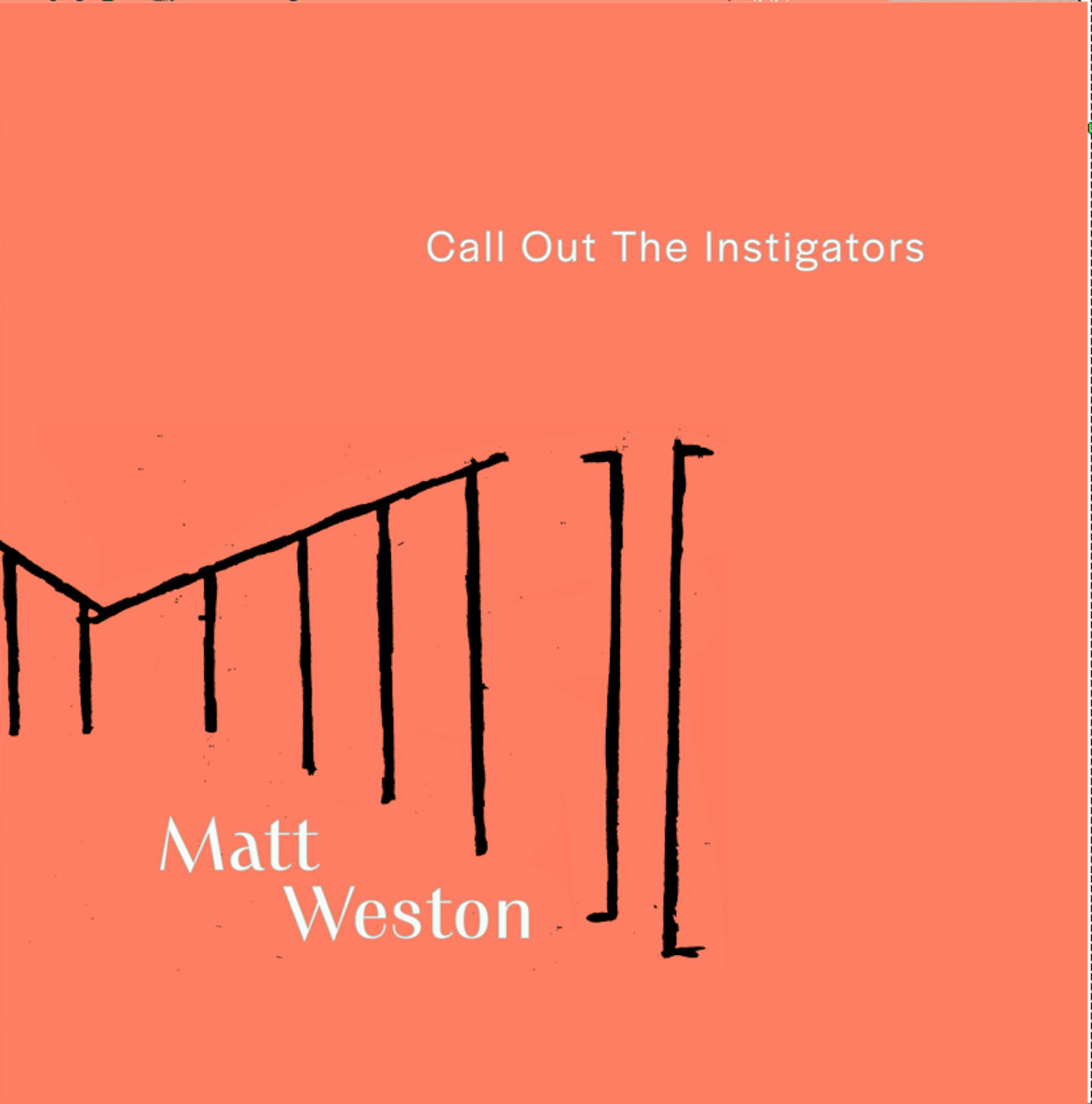 A consistently perplexing artist (in the most complementary way), Matt Weston’s newest double album follows up 2024’s Communism Has Appeared on the Scene with four side-long pieces that refuse to comply to any overt structure or dynamic. Incidental sounds clash with raw electronics, melodic tones are cut with painful drills, and it all, somehow, sticks together beautifully.
Although his previous album featured some conceptual elements centered around place and field recordings, Call Out the Instigators seems to be a work of pure sound and manipulation. Side A's "We Will Haunt You for It" jumps right into the noise. From an opening that is somewhere between the sizzling of a short-circuiting electrical wire and an unrelenting dentist’s drill, Weston throws in the occasional sweeping outburst and eventually a lingering tone that gives a hint of melody. He continues to blend these two extremes, shifting into abstract banging and clattering chaos. The concluding pseudo-organ tones and the echoing sound of a scraping metal chain do well in capturing the Halloween-like vibe throughout this album, although I’m assuming despite the orange cover and late October release date, this is entirely coincidental.
 It has apparently been an entire decade since this Birmingham-based composer last released a solo full-length, which makes Grisaille something of a major event even though Herbert has released a fine EP and a couple of excellent Ogive albums in recent years. For me, he remains one of the most reliably fascinating artists working in the ambient realm, which partially explains his relatively lean discography, as he only seems to surface when he has something fresh and compelling to share. In the case of Grisaille, Herbert began working with a “deliberately restricted palette” back in 2023 in which “musical systems” were “set in motion and allowed to unfold according to their own internal logic.” His intent was to preserve the “uncertainty and vitality of initial instinct” and it worked beautifully, as these seven evocative pieces organically evolve and transform like a sublime and enigmatic dream.
The opening “Graupel” makes it very clear that Herbert meant business when he said that he restricted his palette, as it begins with little more than a soft two-note pattern, some quiet sputters of static, and a cold whistling tone. As it unfolds and expands, however, it gradually blossoms into an immersive and vividly textured headphone experience in which it feels like my head has been filled with viscous, gently bubbling liquid and a soft cacophony of mysterious radio transmissions.
 It is certainly nice to see that Sleep have reformed and begun touring again, but Om has always been my favorite of Al Cisneros’s projects by a country mile and there has been a very large Om-shaped hole in my heart since 2012 that has thus far not been filled by Cisneros’s post-Om run of solo dub releases. While I enthusiastically love both dub and Cisneros’s reinvention as a minimalist psychedelic visionary, nothing has ever come close to fully recapturing the magic of early Om’s hypnotically shifting and organically alive bass-and-drum epics. This latest single, however, is a revelatory exception to that trend, as Cisneros enlisted a small ensemble of like-minded collaborators to re-envision the Sabbath-indebted stoner doom of Sleep’s iconic “Dragonaut” as an old school-style Jamaican dub-reggae banger. The result is an instant Cisneros classic.
Like many of Al Cisneros’s solo releases, “Dragonaut Dub” is essentially just a single, but this one is a bit longer than usual as it features a pair of B-sides dedicated to the late Witch bassist and beloved underground music lifer Dave Sweetapple. The single is definitely where the main action is, however, as “Dragonaut Dub” absolutely rules right from its first notes and beautifully channels most of the best bits of both Om and Sleep with some notable enhancements. Killer central riff? Check! Fluid, freeform bass riffage and shamanic vocals? Check! Are the lyrics about riding a fucking dragon into space? Hell yeah they fucking are.
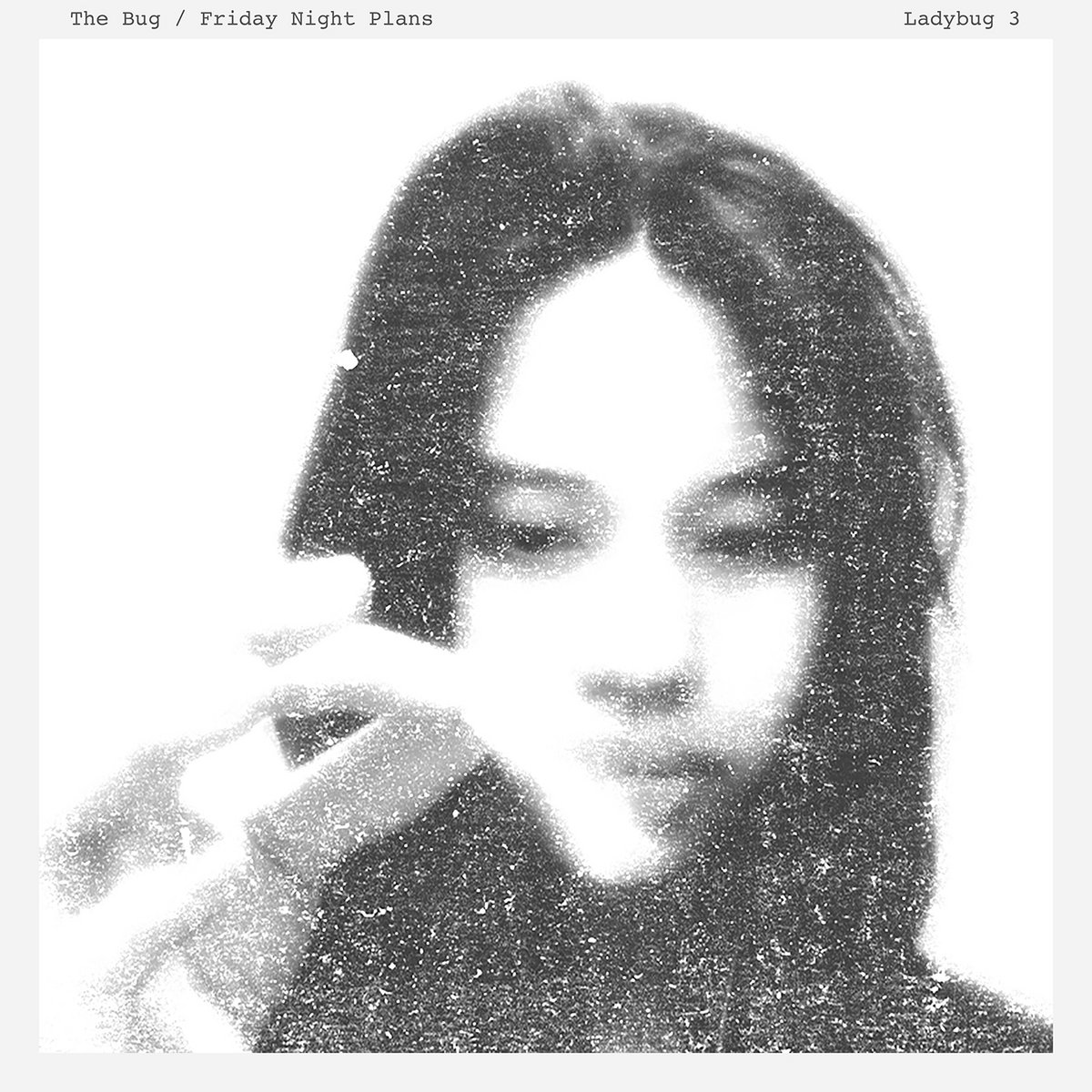 This latest installment of Kevin Martin’s impressive run of killer lady-centric collaborations brings back Tokyo-based chanteuse Masumi Yamamoto for a welcome second appearance. Billed as a “lower, slower, even more wasted transmission” than the duo’s Portishead-esque previous single “Miss U”, Ladybug 3 otherwise repeats its predecessor’s winning palette of crawling bass throb, cavernous percussion echoes, frigid-sounding hiss, and sensuous R&B-inspired vocals for another suite of lurching, slow-motion “Brutalist dub-tech” juggernauts. Unsurprisingly, the single itself (“If”) is yet another half-sultry/half-haunted gem, but the most compelling bit remains the many inventive ways in which Martin repeatedly deconstructs it into a series of cold and crawling mechanized dub nightmares.
Much like the previous two Ladybug EPs, Ladybug 3 is best appreciated as a series of increasingly fucked and weird mutations on the original single (though the original version of “If” is already quite a characteristically fucked and weird starting point). There is an actual sultry and soulful “pop song” at its heart, of course, but the accompanying music is a stark, frigid, and lurching marriage of undulating slow-motion bass throb, hissing texture, and echoing snare hits. That is undeniably expected stylistic terrain for both Martin in general and the Ladybug series in particular, but the duo spice things up a bit this time around with some smeared and curdled vocal harmonies. Unsurprisingly, “If” is another fine slab of creeping, nocturnal, and undead-sounding Bristol-style trip-hop with a strong vocal hook, but the primary allure of this EP again lies in descending deeper into the rabbit hole of frayed and decayed deconstructions that follow.
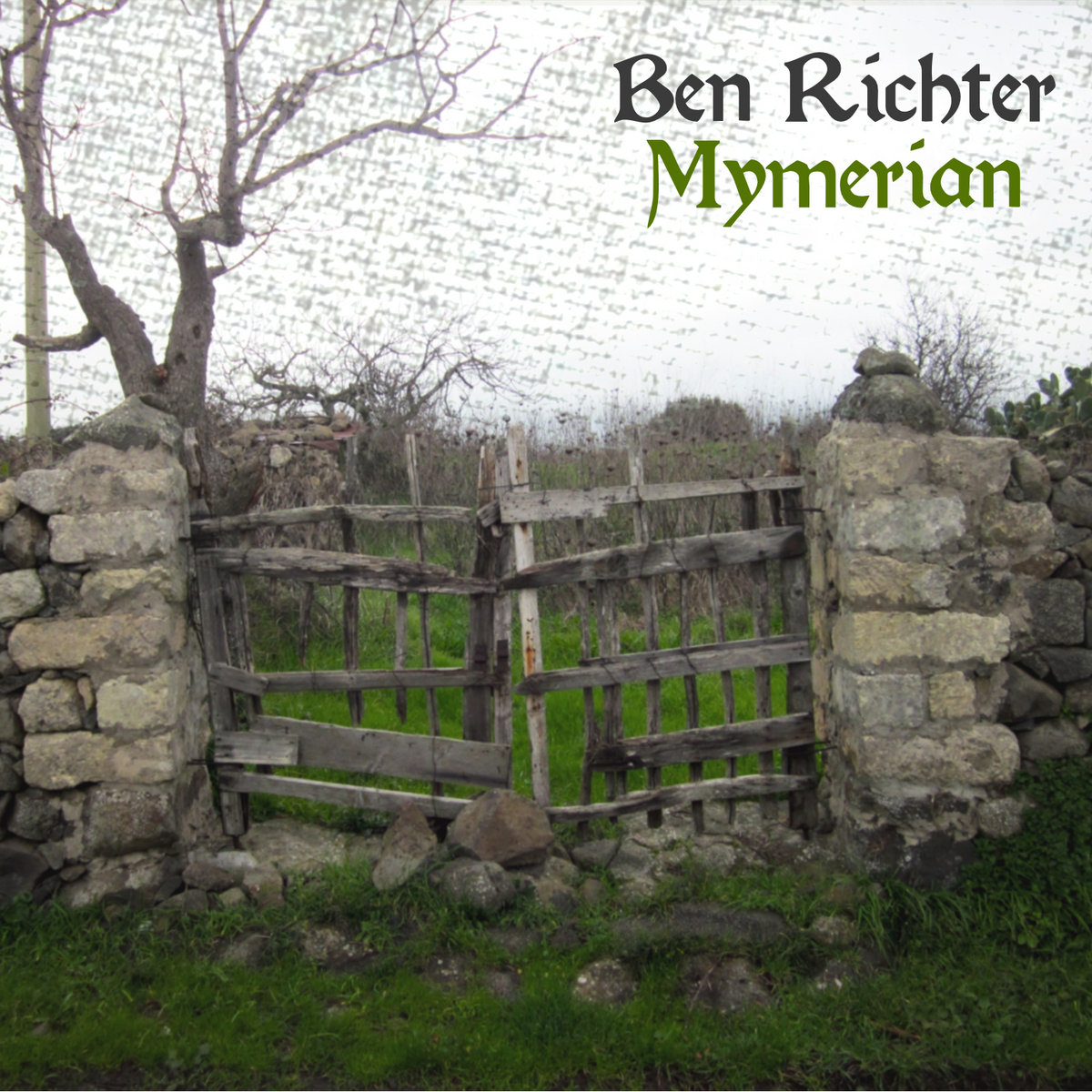
Recorded on a frigid late winter/early spring day in March 2025, the environment in which Mymerian was created aligns well with the coldness of its sound. Ben Richter (organ and accordion) was joined by Laura Cetilia (cello) and Mike Bullock (contrabass) in this performance, resulting in three icy compositions that perfectly channel the bleakness of that time of year, which is I mean as a strong compliment about the confluence of ambience, performance, and composition found here.
Like the most recent release on the Sedimental label (Kassel Jaeger’s A Rift in the Horizon’s Wall), Mymerian was recorded at Epsilon Spires in Brattleboro, Vermont. A former church but now a performance space, the venue’s natural ambience complements the sound impeccably, and the 1906 pipe organ present in the sanctuary of the building that Richter utilizes results a unique space for this trio to perform in. The framework of Mymerian is built upon deep, droning tones that are impacted by the effect of the low temperatures on the instruments’ tuning. The variation in pitch and becomes an essential part of the performance, which complements the fact that the trio are all followers of Pauline Oliveros’ Deep Listening aesthetic, making for a focus on expansive, meditative sound.
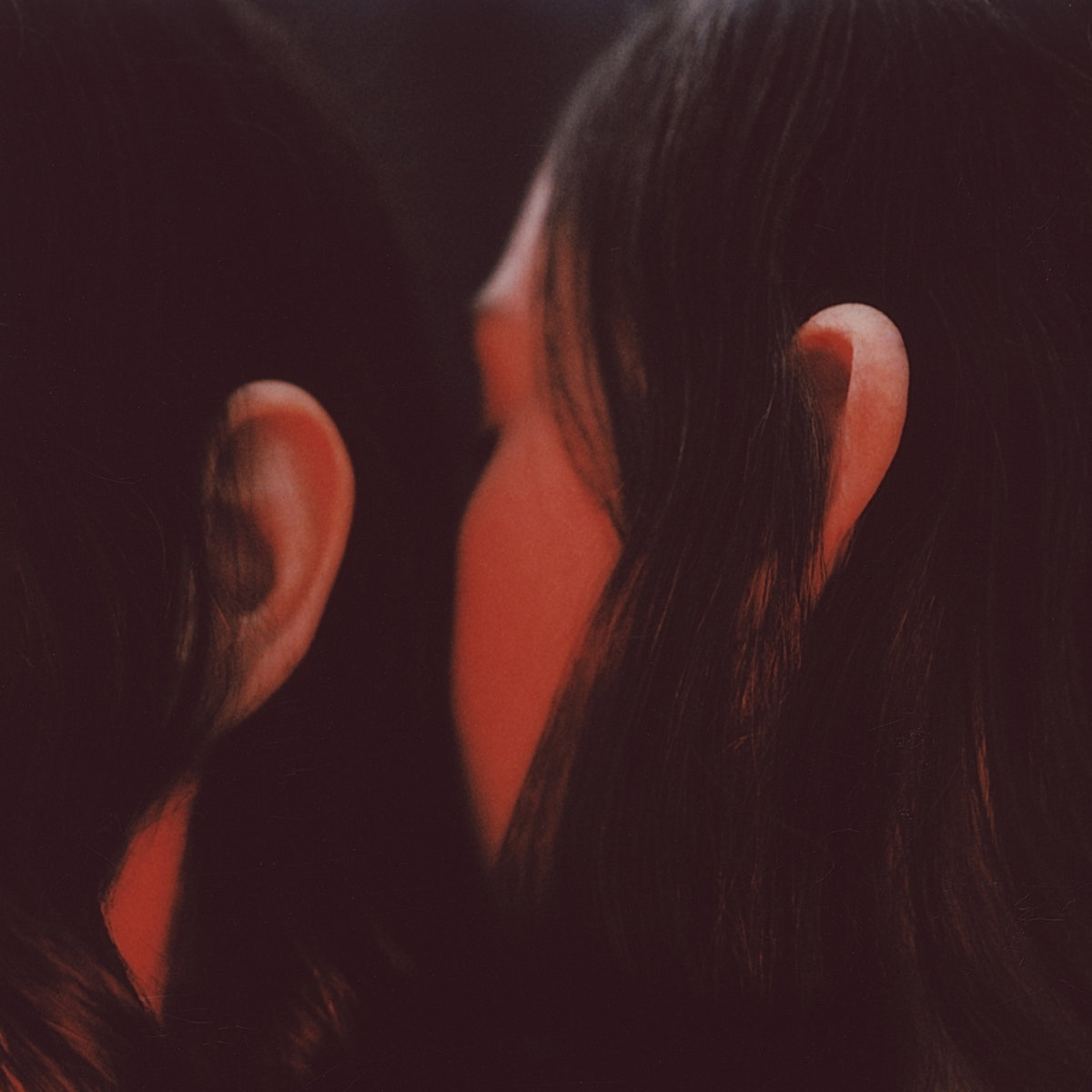
S∞S is a collaboration between Mexican multimedia artists Concepción Huerta and Daniela Huerta (no relation), both of whom have released solo albums on the Elevator Bath label in 2004 (The Earth Has Memory and Soplo, respectively). Consisting of two side-long pieces, the ensamble (sic) shape a multitude of sounds, most of which are unidentifiable, into complex, organic structures that capture both artist’s solo styles well, with the interaction between the two only adding to the album’s brilliance.
The A side of the record is taken up by "Al Vacío," where they open with shimmering passages of sound intertwining, blended by what sounds like a conventional instrument, possibly a guitar or other bowed strings, but may be something else entirely. They solidify the sound as the first segment concludes, shifting the composition to the lower frequency end of the spectrum to accompany the pseudo-strings.