

 I believe this is Andrew Chalk’s first release for Cincinnati's Students of Decay, which is a bit surprising given that the artist and the label have long shared a close stylistic sensibility. Fittingly, this auspicious occasion is celebrated with something of an unusual release in Chalk terms, as Mystical Obscurant is billed as “a rare opportunity to encounter the expansive character” of his sprawling oeuvre “in miniature.” Given how understated Chalk’s vision tends to be, however, that feature will likely be imperceptible to all but the most devoted heads. To be fair, there are certainly pieces here that recall various eras from Chalk’s four decades as one of ambient music’s most sublime and iconoclastic composers (“sacred guitar minimalism,” “smudged keys,” “environmental sound and loop-based constructions,“ etc.), yet the unifying theme has always been an unwavering devotion to quiet, simple beauty and that remains true again here.
There is a reason that Chalk himself always has little to say about each new release, as his career feels like an obsessive lifelong attempt to convey something profound and ineffable. Consequently, the only truly salient information anyone needs about Mystical Obscurant is that it is yet another fine Andew Chalk album, as he has quietly carved out a niche that is uniquely his own and almost every fresh dispatch from that niche is a tiny glimpse of heaven for the converted. For me, the piece that best captures the singular beauty of Chalk’s exquisite craftsmanship is probably “Against the Tide,” which is little more than a gently whistling, murmuring, and shimmering haze, yet it perfectly captures the magic of shifting patterns of light passing through gently swaying blinds on a sleepy summer day. That said, the opening “The Seed of Sorrow” is a sublime bit of sorcery as well, as Chalk’s palette is reduced to just a slow-motion melody of lazily streaking notes with long decays that form ephemeral harmonies with the dying embers of the previous notes.
 This latest statement from this shapeshifting Oslo producer is quite a radically deconstructed foray into “decelerated, spectral dub.” The album borrows its title from Apichatpong Weerasethakul’s elusive, haunting, and uncategorizable 2021 film of the same name, yet Villain was also greatly inspired by Pauline Oliveros’s writings on “internally recalled sounds inaudible to others.” As befits an album inspired by said iconic deep listening visionary, Memoria is a deeply immersive and mesmerizing bombshell that absolutely requires headphones (or at least a building-shaking soundsystem) to reveal the full scope of its beautifully nuanced, vividly realized, spatially rich, and legitimately otherworldly vision. It is also fitting that Apichatpong Weerasethakul’s “sound as memory” rumination features a bit of a science fiction twist, as pieces like “Entre Nosotros” may very well be the most boldly futuristic iteration of dub that anyone will release this year.
After a brief yet gorgeous intro (“Labour of Imagination”) of deep exhalation-like chords and sensuous flutes that feel like a descent into a hallucinatory Peruvian rainforest, Villain gets right to the serious business of blowing minds with the aforementioned “Entre Nosotros.” While it is ostensibly just slow-motion dub techno with a bit of industrial hum, the magic lies in the sound design, as the groove feels unsettlingly viscous and a bit like the churning and throbbing of a vast subterranean machine. More glibly put, I would describe it as the seismic and gelatinous cosmic horror dance party of the year, but a ghostly, murky, and overlapping piano concerto gradually drifts into the piece as well and floats throughout space like Keith Jarrett transmitting phantom improvisations from the afterlife (which would be quite a neat trick, given that he is still alive). The following title piece is something of a sound design gem as well, as a faint sheen of ambient music drifts over a churning and shapeshifting landscape of industrial throbs, buzzes, and hums. Hell, I think there might also be the ghost of a buried rave anthem in there as well.
 This latest full-length from Alex Cobb (the man behind the Students of Decay and Soda Gong labels) is a fascinating departure from his usual fare, as it was inspired by a recent stay at a Zen Buddhist meditation retreat. The unusual title alludes to a short poem that Cobb wrote as “an attempt to transcribe the experience of intensive zazen through a simple image of a chair tied to a faucet by a length of rope.” In musical terms, the experience led him to work exclusively with a Serge Modular synth and “an almost entirely dry signal path, interrupted only by small, intentionally deployed instances of reverb.” In essence, the Serge “invites direct engagement with the slippery materiality of electricity itself,” which seems to have been an ideal match for Cobb’s newly heightened powers of patience, restraint, and control. To my ears, this is quite possibly his finest album to date, as its two longform pieces are gently psychotropic deep drone nirvana.
The album is divided into two sidelong pieces that are each composed of two parts. In the brief opener “The Chair I,” a harmonium-like drone languorously oscillates and subtly expands beneath subtly spacey streaks of slow-motion melody. While it is the most conventionally “ambient” piece on the album, it does feature a few more nuanced elements that foreshadow the pleasures to come, as oscillations quietly speed up and slow down and a bleary cloud of quivering overtones gradually forms and hovers above everything. In the lengthier “The Chair II,” a deeper, hollower drone conjures both a similarly bleary oscillating haze and a gently pulsing and subtly shifting rhythm.
 This sixth album from English slow-motion guitar magician Dean McPhee is something of a major creative leap forward, as he has newly expanded his arsenal of gear to now include a “powerful 18-inch subwoofer” and a wooden snare percussion pedal. While such a modest expansion would likely be a complete non-event for most artists, it is a massive development for McPhee, as his overdub-free real-time minimalism is now enhanced with an impressively solid approximation of a Jamaican dub-style rhythm section. In short, Dean McPhee is now a proper one-man band. Unsurprisingly, that enhanced palette unlocks a whole new world of rhythmic and dynamic possibilities that McPhee puts to especially inspired use in the titular side-long closing epic yet this whole release is remarkably strong, as it feels like a great single backed with a fine pair of languorously psychedelic zone-outs.
The opening “Indica Fields” captures McPhee at his most lean and focused, as he manages to condense all of his usual epic tropes into a mere 5 minutes of simmering slow-motion folk/desert blues. Aside from the winding and circular melodic hook at its heart, “Indica Fields” is most notable for the echoing decay of the wooden snare and its looping bass line, which is the first of the album’s many nods to McPhee’s dub inspirations. For me, however, the crucial difference between a great Dean McPhee piece and a merely good Dean McPhee piece is whether or not I am blindsided by some kind of showstopping transition or dazzling effects pedal showcase. As it turns out, “Indica Fields” boasts two such passages, as one solo feels like a skyful of streaking comets, while another beautifully segues from backwards melodies to shimmering washes of rippling arpeggios.
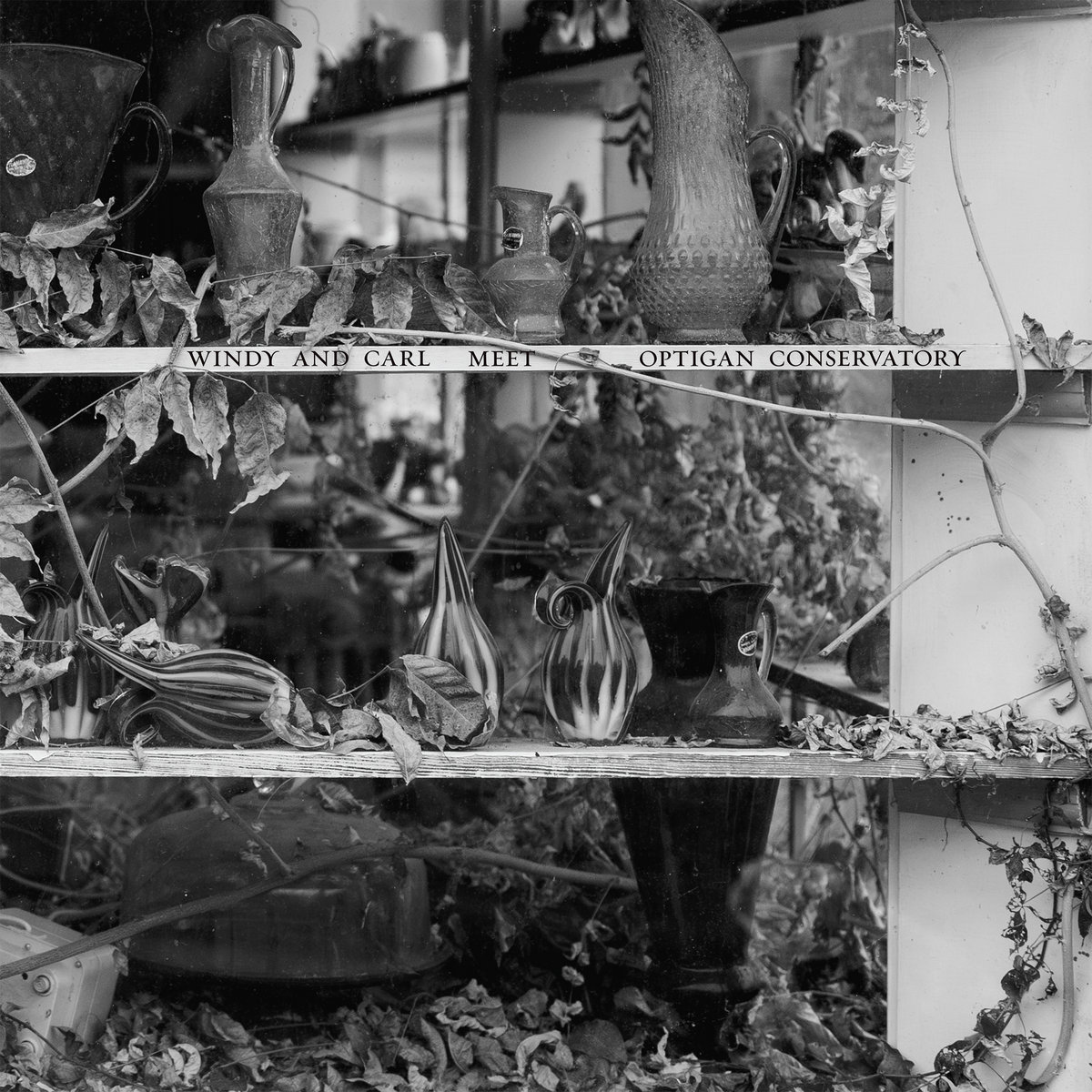 This collaboration between four Michigan-based underground music lifers is something of a dream supergroup for me, as it brings together my favorite ambient/space rock duo with one of my favorite songwriters (Fred Thomas of Saturday Looks Good To Me). Sadly, Fred is off the clock as a songwriter for this one, but the consolation prize is that this is my first exposure to his Optigan Conservatory bandmate Frank Rotondo, who is the leader of the long-running Detroit-area free music ensemble Laughing Gas. The result of this long-gestating union of old friends is a series of drone-based improvisations that were later fleshed out and enhanced with overdubs and edits. Stylistically, it lands quite close to the twinkling and shimmering guitar bliss of classic Windy & Carl (which is perfectly fine by me), but there are also some fresh and compelling innovations that leave me hoping that this album is the beginning of something more rather than just a mere one-off.
The opening “Conductor” makes for a representative if teasingly brief introduction to the pleasures that follow, as a slowly flanging synth drone is gradually fleshed out with sustained harmonium tones and a pleasantly disjointed and disorienting calliope-like motif. That last bit is the part that most sets this quartet apart from most other purveyors of spacy psychedelic drones, but there are also some cool tingling frequencies that are more felt than heard.
 This latest full-length from the Stockholm-based Lewis is billed as a “a deceptive recording with veiled melodies and clandestine bangers,” which feels more or less apt to me. Stylistically, Opening feels more like an eclectic grab bag of commissions, sketches, and cool ideas than it does a focused and fully formed statement like Ingrid or Thankful, but her collaborative albums are frequently collections of similarly short, spontaneous-sounding pieces and those tend to be every bit as rewarding as her more composed longform work and that remains true here as well. Aside from its comparative brevity and eclecticism, Opening’s other defining trait seems to be a fondness from playfully manipulating and looping orchestral samples, which makes it one of her more nakedly melodic and less noise-gnawed releases (though there are still plenty of beautifully frayed and blown-out textures to be found among these brief and sublime vignettes).
The opening “Ta Min Hand” is the first and the best of the album’s many clandestine bangers, as it quickly evolves from the sounds of hissing rain and dripping subterranean ambiance into a downright rapturous ascending melody of sensuously smeared and swooping sax with fitfully sharp and distorted edges. Eventually, instability triumphs and the melody breaks free of its obsessively looping structure to leave behind a jazzy sax solo in a blown-out and echoing miasma of noise.
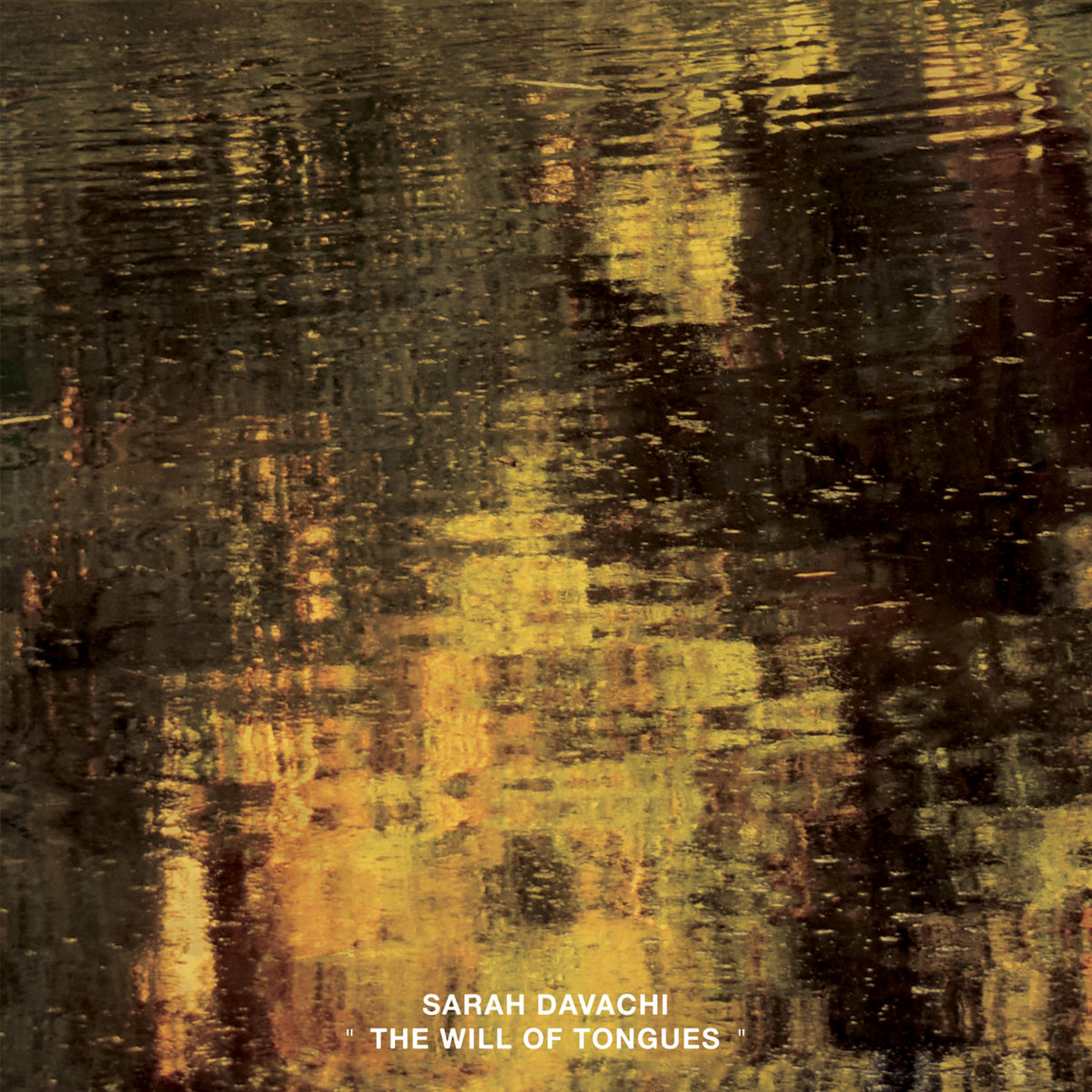 Billed as this Los Angeles-based composer’s “most ambitious work to date,” this overwhelming triple LP collection brings together five solo pipe organ compositions, a choral suite, a collection of “interludes” for microtonal ensembles, and a new longform chamber piece. Notably, Davachi recently completed a doctoral study in timbre, phenomenology, and critical organology and The Will of Tongues very clearly feels like the fruit of all those years of research, which is another way of saying “this is extremely challenging music.” The emphasis is primarily upon “compositional concepts and methods that have preoccupied Davachi over the past decade” and that list covers “iteration, tuning theory, textural and timbral variation, extended duration, vertical harmony, intervallic affect, and canonic structure.” In short, this is one for the deepest of deep listeners, as Davachi brought in a sprawling and eclectic cast of guests ranging from avant-garde luminaries like Eyvind Kang to a microtonal brass ensemble to a Renaissance flute consort for a durational yet time-dissolving deep dive into the minutiae of timbre and harmony.
In one of my favorite sketches from Tom Scharpling’s The Best Show (“The Music Scholar”), the endlessly hilarious Jon Wurster calls in pretending to be a jaded and relentlessly namedropping record store owner who proceeds to dismiss absolutely every good band ever. After casually trashing everyone from The Beatles to Big Star, he gradually reveals that his taste has become so sophisticated that he can now only listen to field recordings of complete silence recorded by one specific artist.
 Despite being a fairly devout Bill Orcutt fan for the last decade or so, I never followed his Fake Estates imprint too closely until recently, as it seemed to exclusively be a destination for his most mischievous, obtuse, and unapologetically indulgent ideas. Over the last few years, however, the imprint has blossomed into the home for an increasingly audacious and endearingly demented series of software experiments and batshit crazy conceptual releases that bear almost zero resemblance to his more celebrated guitar releases yet feel every bit as essential.
Fake Estates
While A Mechanical Joey remains my clear favorite among his Fake Estates forays, The Four Louies (2024) stands as an equally bananas example of Orcutt's cracked vision, as he gleefully mashed up two very different primitive, iconic, and polarizing pieces of music: the Kingsmen’s slurred and incomprehensible frat party anthem "Louie Louie" and the punishingly repetitive chord deconstruction of Steve Reich’s "Four Organs." Admittedly, I could not get into the relentless plunderphonic repetition of The Four Louies at the time of its release much, but Orcutt has ingeniously managed to breathe new life into the piece with this raucous performance from last March, as his star-studded live band improbably transformed the simplest riff of all time into raw, roaring, and ecstatic drone freak-out.
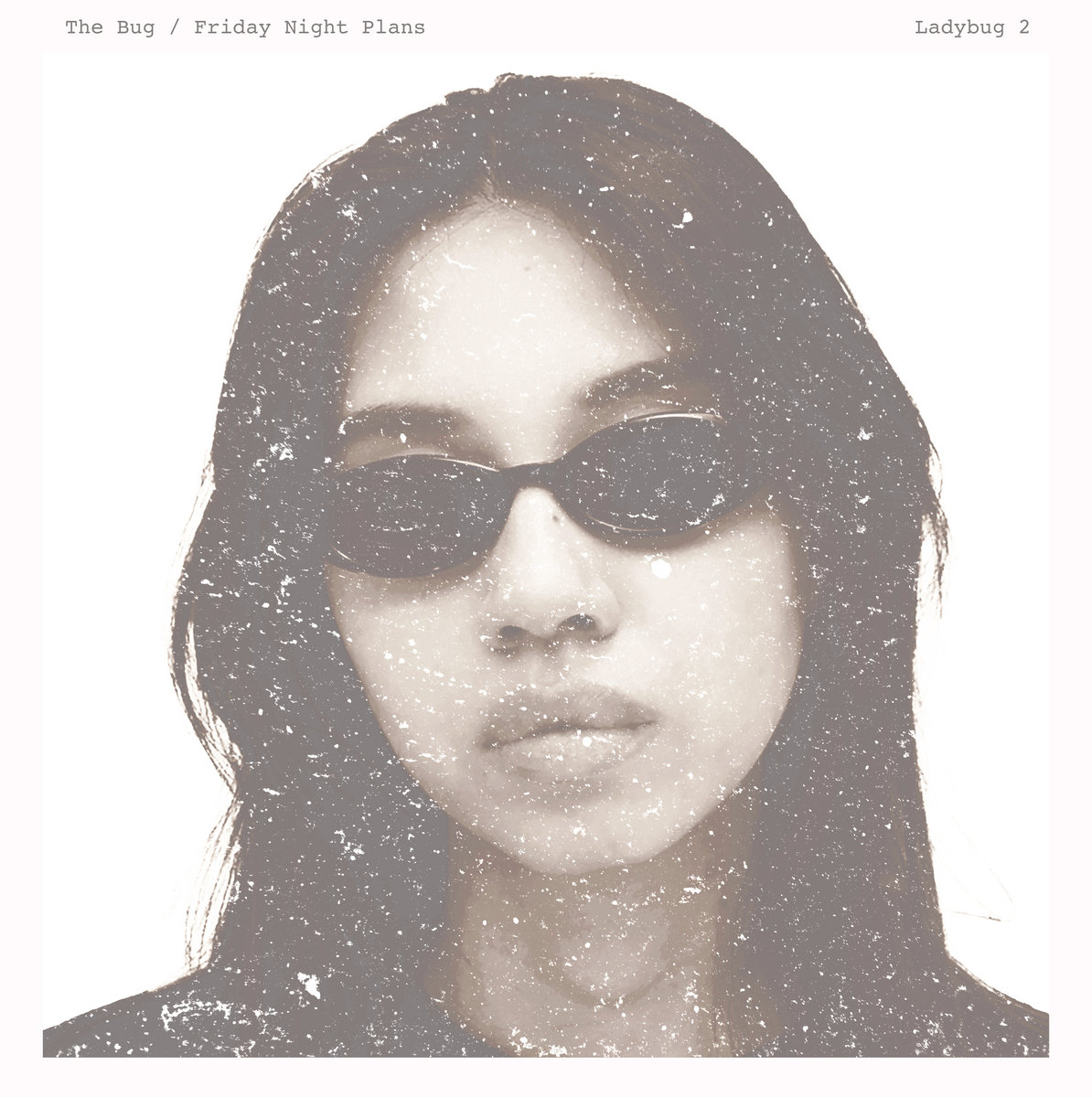 This second installment of Kevin Martin’s Ladybug series pairs the Brussels-based producer with Tokyo-based torch singer Masumi Yamamoto. While this single was my first exposure to her work, Martin has been a fan of her Friday Night Plans project since at least 2023, as he proclaimed her Visitors to be his favorite album of the year in Boomkat’s annual artist list extravaganza. Given that Martin himself is again the driving force behind the music and the production, Ladybug 2 understandably shares a lot of stylistic similarities with the previous Dis Fig installment (haunted vocals, spartan instrumentation, long ghost trails of hissing decay, and big post-industrial vibes), but the trip-hoppier aspects land closer to Portishead than Massive Attack this time around. Or, as the album description more colorfully puts it, "a dream journey from Twin Peaks to Kingston, Jamaica, via Bristol."
The single this time around is entitled "Miss U" and it roughly sounds like a stripped-down Portishead performing in a cavernous industrial space. Aside from the fact that Portishead are one of Bristol’s many iconic trip-hop pioneers, however, the resemblance mostly comes down to just the sound of Masumi’s voice and a pervasive vibe of ghostly slow-motion heartache. Pressure’s perceived Twin Peaks element likely comes from Masumi as well, as her solo work can sometimes resemble a bleary and nocturnal Julee Cruise-style chanteuse time-stretched and blurred into ambient dub. With Martin at the controls, however, the musical palette is reduced to just a slow-motion kick drum stomp, a clap, a high hat, deep sub-bass, and a pair of frayed and stormy dub chords. In theory, the existence of those chords makes Ladybug 2 a bit more musically expansive than its predecessor, but in practice it feels similarly stark because the bass line is much less central.
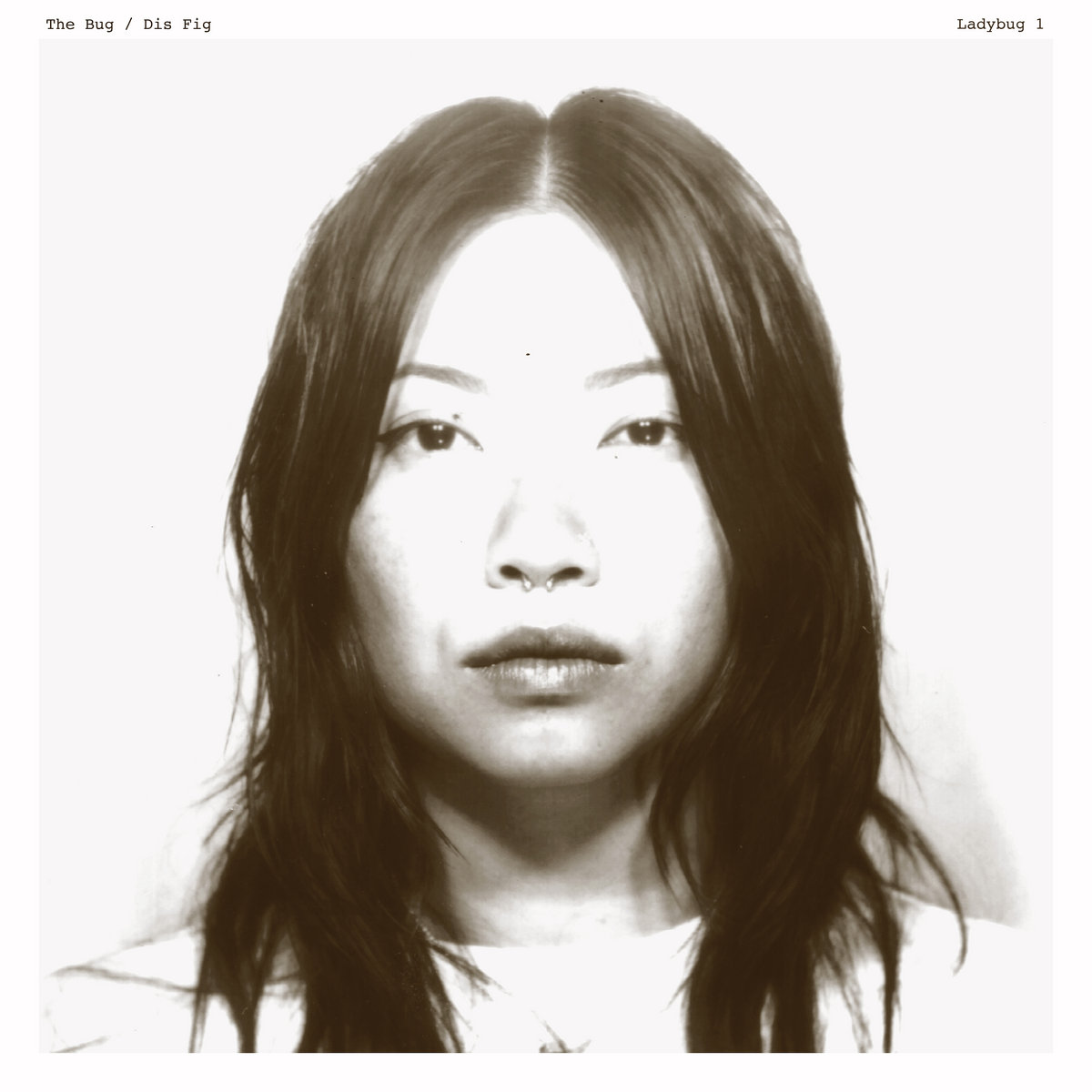 This amusingly titled new series of maxi-singles is devoted to collaborations between heavyweight dub auteur Kevin Martin and a resolving cast of like-minded female artists. Naturally, the first installment is devoted to Martin’s recurring collaborator Dis Fig (Felicia Chen), as the two previously worked together on 2020’s excellent In Blue album (Hyperdub) as well as the 2025 single "Silent." Self-described as a "hallucinatory heat haze," this "tale of post-break-up trauma" is very different from any of the duo’s previous pairings, as Dis Fig’s dark and spectral twist on soulful pop songcraft becomes the canvas for a series of bass-heavy, blown-out, and static-ravaged dirge-dub mutations.
In some ways, the actual single ("Vanishing") is more of a conventional pop song than anything on In Blue, as it is just over three minutes long and features both a sensuous bass throb and a melodic chorus hook. In most other ways, however, it heads very much in the opposite direction, as it is quite a cold and minimal piece and one of its most prominent traits is that the crawling groove seems to be dragging a squall of moaning, hissing, and echoing nightmares in its wake. In fact, it arguably resembles an undead Massive Attack performing in a haunted underground parking garage, which is an aesthetic that I would generally prefer over hearing an actual Massive Attack song these days. In characteristic The Bug fashion, it is also pared to the fucking bone, as the actual music is essentially just a cool bass line, Dis Fig’s voice, a high hat, a kickdrum, and a snare, but it becomes even more spartan than that in the four variations that follow. The throbbing bass and the static-gnawed ghost trail of delay, however, remain very much the stars of the show.
 This quietly mesmerizing and unconventional Australian artist has had quite a unique trajectory, as she first began releasing music as Honey Stretton in London back in 2016 and her debut single ("The Thrill of Loneliness") was a massive hit by indie standards. She followed that success with an EP (Wail) later that same year but soon vanished from public life and moved back to rural Australia to tend the animals on her late grandmother’s farm. While she was alone on the farm, however, she recorded a host of new songs on a nylon string guitar and some borrowed gear while enduring one of the most catastrophic bushfire seasons in Australian history and the rampaging COVID outbreak. Eventually, one of her friends persuaded her to release those new songs and they ultimately became 2023’s Soon album, which resulted in an opening slot on a Mount Eerie tour, international critical acclaim, and a reissue on Phil Elverum’s P.W. Elverum & Sun label. This follow up dissolves her lovely and intimate songs much deeper into ambient abstraction, as it feels like a series of hypnagogic tropical mirages and beachside field recordings mingled with flickering and elusive glimpses of beautifully hymn-like songs.
P.W. Elverum & Sun/Brierfield Flood Press/Lima Limo
Tiarn (which means "landholder) was similarly self-recorded in isolation, as Stretton relocated to the small coastal village of Tabourie Lake, where she reconnected to her community by joining a regional choir, observed the migration of whales, and went for regular "blue hour" swims in the South Pacific. All of those elements proved to be significant inspirations, as did a trove of family home movies filmed in Tokyo back in the early ‘90s before Hana’s birth. In particular, Stretton was fascinated by a clip that depicted "distant mountains, and Stretton’s young family looking over the valley in the soft static of one Japanese summer evening" and "a simpler, more connected time." Armed with a few acoustic instruments and a previously unused synth that her family had purchased during their Tokyo years, Stretton "began recording music directly to that footage - letting the images dictate the melody" and weaving in "voices, insects, weather, movement, and the ambient sounds of the valley." In essence, this album is a lovingly crafted and impressionistic soundtrack to a hazy and dreamlike VHS dispatch from the blissful time just before her own conception.


