Podcast Episodes 817, 818, and 819 are now live
It's Rocktoberfest
We are feeding you three episodes this weekend (because there will likely be no episode next weekend).
Episode 817 features new music from Jan St. Werner, claire rousay, serpentwithfeet, Bow and Arrow, Laura Hickli, Annie Bloch, and Pete Swanson & Ilyas Ahmed, plus older music from Hallucinator, Boris with Michio Kurihara, and Cabaret Voltaire.
Episode 818 has new tunes by HAAi feat. Skybreak, Cantoalegre, more eaze, Neroba, Jeffrey Alexander + The Heavy Lidders, Matt Rösner, Bana Haffar, and Thomas Brinkmann, plus not so new tunes by Rev Magnetic, Whitelands remixed by A.R. Kane, and XTC as The Dukes of Stratosphear.
Episode 819 has got new music by Laibach feat. Kaja Skrbinšek, Marc Almond and the McCarricks, Gayance feat. Dal Bò, Son Lux, Rocketship, The Church, Sun Araw, and Gnod, plus music from the vaults by Camille O’Grady and Ida.
Images have been dug up by Erin in Mobile, Alabama for all three of this weekend's episodes.
Get involved: subscribe, review, rate, share with your friends, send images!















Read more …


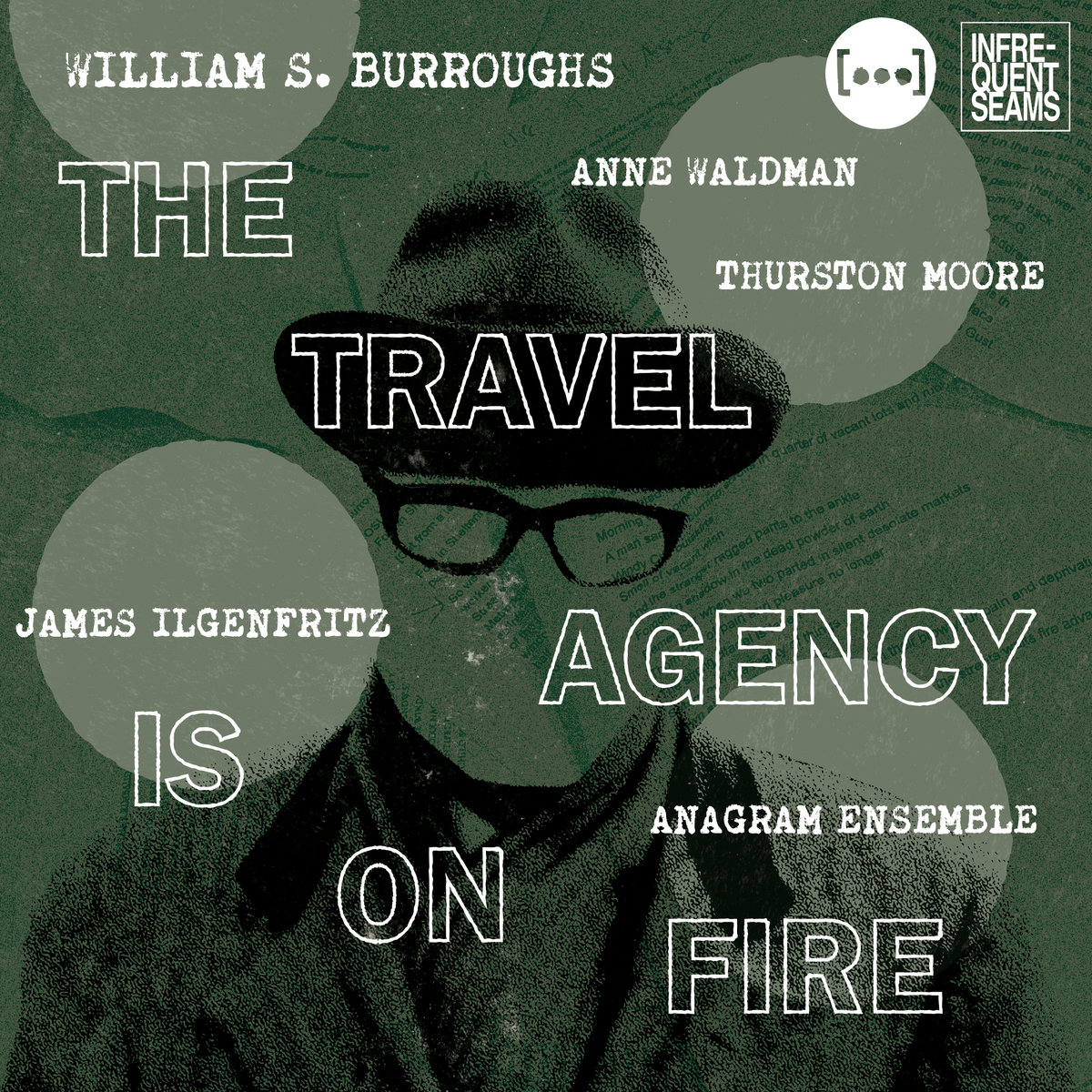 This fascinating and ambitious boxed set is a star-studded celebration inspired by a trove of previously unpublished cut-up works by William S. Burroughs unearthed by Burroughs scholar Alex Wermer-Colan in 2015. The project’s other central figures are composer James Ilgenfritz, poet Anne Waldman, and Thurston Moore (albeit mostly in spoken word mode). Notably, this is Ilgenfritz’s second major work devoted to Burroughs, as he previously composed a video opera for The Ticket That Exploded back in 2011. While Ilgenfritz’s Anagram Ensemble returns again here, The Travel Agency Is On Fire is otherwise a VERY different animal than its predecessor, as it features guest contributions from a number of NYC avant-garde luminaries (Jim Thirlwell, Zeena Parkins, Elliott Sharp, etc.) as well as an entire disc in which many of those contributions are compellingly chopped up and recontextualized by Ilgenfritz. While Burroughs is ostensibly the star here (for the first two discs, at least), this collection’s best moments transcend the original objective entirely and feel like nothing less than an immersive and impressionist sound collage that drops listeners directly into the heart of NYC’s mid-20th century avant-garde golden age.
 It may have taken a decade or so, but Liz Harris’s wonderful indie/jangle pop throwback trio have finally resurfaced with their follow-up to 2015’s The Original Faces. Notably, I had always figured that Helen was destined to be a one-off event, so their return is quite a pleasant surprise in general, but Linda’s Head is also a pleasant surprise in some stylistic ways as well. For one, the noisier and more raw shoegaze-inspired guitars of Helen’s debut have been largely replaced by punchy fuzz- and jangle-pop delights that recall the heyday of the great regional indie pop scenes in the Pacific Northwest, New Zealand, and Scotland. The even bigger surprise, however, is that Linda’s Head also features a handful of songs that feel like glimpses of an “alternate timeline” version of Grouper that veered a bit more towards hooks and warmth than hushed, nocturnal intimacy and shadowy atmospheres.
 I was quite a big fan of this Swiss pianist’s solo debut (2022’s Keemuun), which is rather fortuitous because this latest album is both the spiritual and literal descendent of Keemuun’s swirling and delirious prepared piano workouts. More specifically, Figuren’s source material comes from ten intimate studio performances of pieces from Keemuun that have now been unrecognizably transformed through “deconstructed melodic elements, isolated individual tones, and extracted resonances.” While some reworkings from that process apparently surfaced on Loher’s previous album (the more dissolved and hazy Hug of Gravity), they have since undergone yet another radical transformation, as Loher ran fragments of melody through a Revox B77 tape machine and “subtly altered their pitch before digitizing and reshaping them once again.” The result feels akin to a cool tape loop album, as repetition and distressed tape effects transform Loher’s melodies into a beautifully broken, haunted, intimate, and otherworldly soundworld of lingering dissonances.
 The pipe organ has undergone quite a renaissance in recent years, as the instrument’s uniquely sonorous, room-filling sound understandably holds a lot of allure for many contemporary drone artists. However, French composer Maxime Denuc is something of an intriguing outlier in that regard. On this, his first release for Caterina Barbieri’s light-years imprint, Denuc wields a “hand-built Max/MSP sequencer” to precisely control the instrument via MIDI and unleash “dense clouds of impossible-to-play notes that ricochet backwards and forwards through history.” Notably, that last bit is a reference to Denuc’s ambitious efforts to imagine “a point of creative symbiosis between the Catholic church and the ecstatic dancefloors of the early '90s.” While blurring baroque music and progressive trance into a single unified vision is an admittedly cool trick, doing it in an entirely beatless way undeniably limits the idea’s potential a bit. Consequently, some of the strongest pieces on Club Imperial tend to be the less conceptually radical ones that nod to the more ambient/kosmische side of krautrock visionaries like Popol Vuh.
 I believe this is Andrew Chalk’s first release for Cincinnati's Students of Decay, which is a bit surprising given that the artist and the label have long shared a close stylistic sensibility. Fittingly, this auspicious occasion is celebrated with something of an unusual release in Chalk terms, as Mystical Obscurant is billed as “a rare opportunity to encounter the expansive character” of his sprawling oeuvre “in miniature.” Given how understated Chalk’s vision tends to be, however, that feature will likely be imperceptible to all but the most devoted heads. To be fair, there are certainly pieces here that recall various eras from Chalk’s four decades as one of ambient music’s most sublime and iconoclastic composers (“sacred guitar minimalism,” “smudged keys,” “environmental sound and loop-based constructions,“ etc.), yet the unifying theme has always been an unwavering devotion to quiet, simple beauty and that remains true again here.
 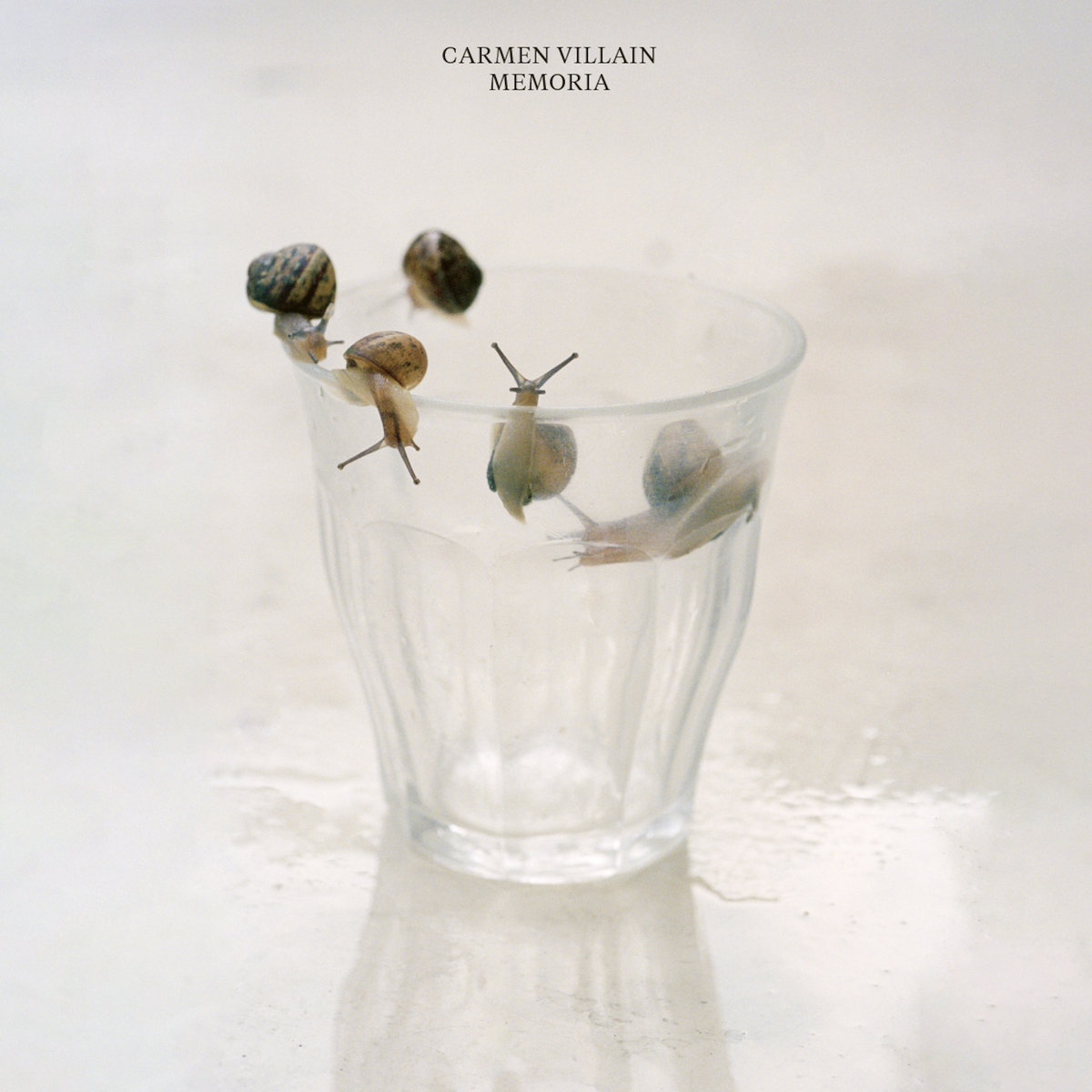 This latest statement from this shapeshifting Oslo producer is quite a radically deconstructed foray into “decelerated, spectral dub.” The album borrows its title from Apichatpong Weerasethakul’s elusive, haunting, and uncategorizable 2021 film of the same name, yet Villain was also greatly inspired by Pauline Oliveros’s writings on “internally recalled sounds inaudible to others.” As befits an album inspired by said iconic deep listening visionary, Memoria is a deeply immersive and mesmerizing bombshell that absolutely requires headphones (or at least a building-shaking soundsystem) to reveal the full scope of its beautifully nuanced, vividly realized, spatially rich, and legitimately otherworldly vision. It is also fitting that Apichatpong Weerasethakul’s “sound as memory” rumination features a bit of a science fiction twist, as pieces like “Entre Nosotros” may very well be the most boldly futuristic iteration of dub that anyone will release this year.
  This latest full-length from Alex Cobb (the man behind the Students of Decay and Soda Gong labels) is a fascinating departure from his usual fare, as it was inspired by a recent stay at a Zen Buddhist meditation retreat. The unusual title alludes to a short poem that Cobb wrote as “an attempt to transcribe the experience of intensive zazen through a simple image of a chair tied to a faucet by a length of rope.” In musical terms, the experience led him to work exclusively with a Serge Modular synth and “an almost entirely dry signal path, interrupted only by small, intentionally deployed instances of reverb.” In essence, the Serge “invites direct engagement with the slippery materiality of electricity itself,” which seems to have been an ideal match for Cobb’s newly heightened powers of patience, restraint, and control. To my ears, this is quite possibly his finest album to date, as its two longform pieces are gently psychotropic deep drone nirvana.
  This sixth album from English slow-motion guitar magician Dean McPhee is something of a major creative leap forward, as he has newly expanded his arsenal of gear to now include a “powerful 18-inch subwoofer” and a wooden snare percussion pedal. While such a modest expansion would likely be a complete non-event for most artists, it is a massive development for McPhee, as his overdub-free real-time minimalism is now enhanced with an impressively solid approximation of a Jamaican dub-style rhythm section. In short, Dean McPhee is now a proper one-man band. Unsurprisingly, that enhanced palette unlocks a whole new world of rhythmic and dynamic possibilities that McPhee puts to especially inspired use in the titular side-long closing epic yet this whole release is remarkably strong, as it feels like a great single backed with a fine pair of languorously psychedelic zone-outs.
 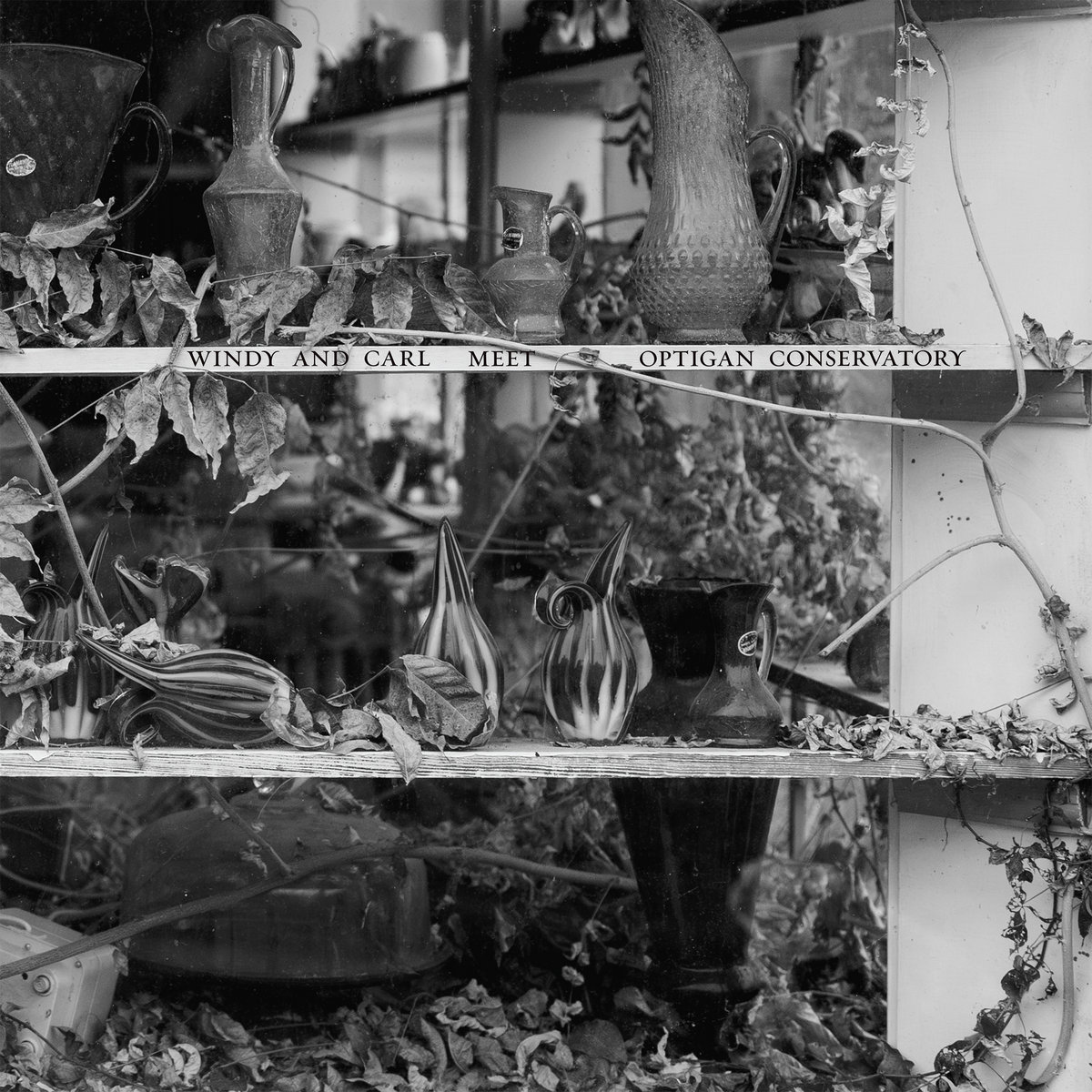 This collaboration between four Michigan-based underground music lifers is something of a dream supergroup for me, as it brings together my favorite ambient/space rock duo with one of my favorite songwriters (Fred Thomas of Saturday Looks Good To Me). Sadly, Fred is off the clock as a songwriter for this one, but the consolation prize is that this is my first exposure to his Optigan Conservatory bandmate Frank Rotondo, who is the leader of the long-running Detroit-area free music ensemble Laughing Gas. The result of this long-gestating union of old friends is a series of drone-based improvisations that were later fleshed out and enhanced with overdubs and edits. Stylistically, it lands quite close to the twinkling and shimmering guitar bliss of classic Windy & Carl (which is perfectly fine by me), but there are also some fresh and compelling innovations that leave me hoping that this album is the beginning of something more rather than just a mere one-off.
 This latest full-length from the Stockholm-based Lewis is billed as a “a deceptive recording with veiled melodies and clandestine bangers,” which feels more or less apt to me. Stylistically, Opening feels more like an eclectic grab bag of commissions, sketches, and cool ideas than it does a focused and fully formed statement like Ingrid or Thankful, but her collaborative albums are frequently collections of similarly short, spontaneous-sounding pieces and those tend to be every bit as rewarding as her more composed longform work and that remains true here as well. Aside from its comparative brevity and eclecticism, Opening’s other defining trait seems to be a fondness from playfully manipulating and looping orchestral samples, which makes it one of her more nakedly melodic and less noise-gnawed releases (though there are still plenty of beautifully frayed and blown-out textures to be found among these brief and sublime vignettes).
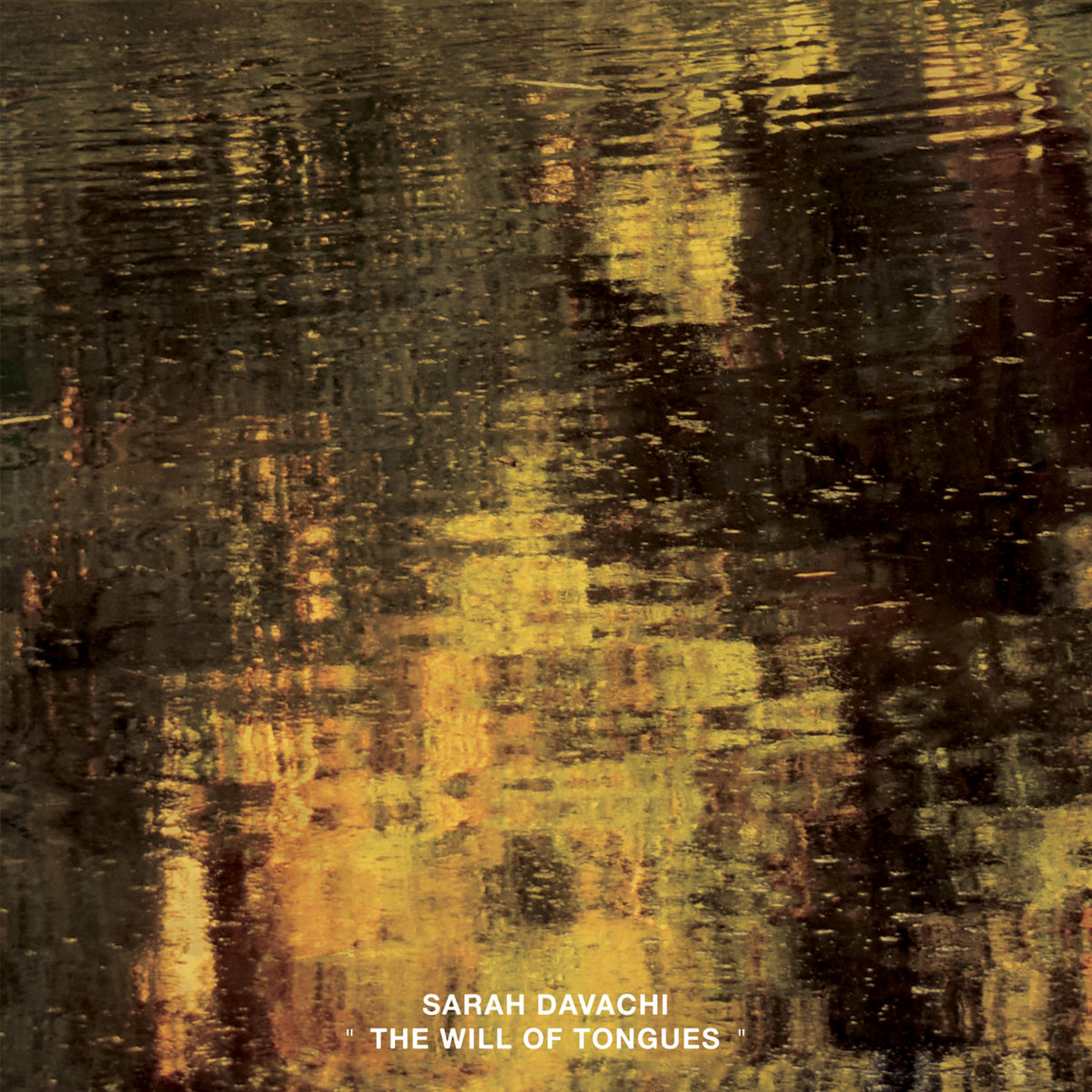 Billed as this Los Angeles-based composer’s “most ambitious work to date,” this overwhelming triple LP collection brings together five solo pipe organ compositions, a choral suite, a collection of “interludes” for microtonal ensembles, and a new longform chamber piece. Notably, Davachi recently completed a doctoral study in timbre, phenomenology, and critical organology and The Will of Tongues very clearly feels like the fruit of all those years of research, which is another way of saying “this is extremely challenging music.” The emphasis is primarily upon “compositional concepts and methods that have preoccupied Davachi over the past decade” and that list covers “iteration, tuning theory, textural and timbral variation, extended duration, vertical harmony, intervallic affect, and canonic structure.” In short, this is one for the deepest of deep listeners, as Davachi brought in a sprawling and eclectic cast of guests ranging from avant-garde luminaries like Eyvind Kang to a microtonal brass ensemble to a Renaissance flute consort for a durational yet time-dissolving deep dive into the minutiae of timbre and harmony.


